This week was about one thing: reports you can trust and act on. Every finding now shows where it happened and how to see it yourself, and Persqo now works inside WooCommerce and WordPress.
The free check now walks your site like a shopper
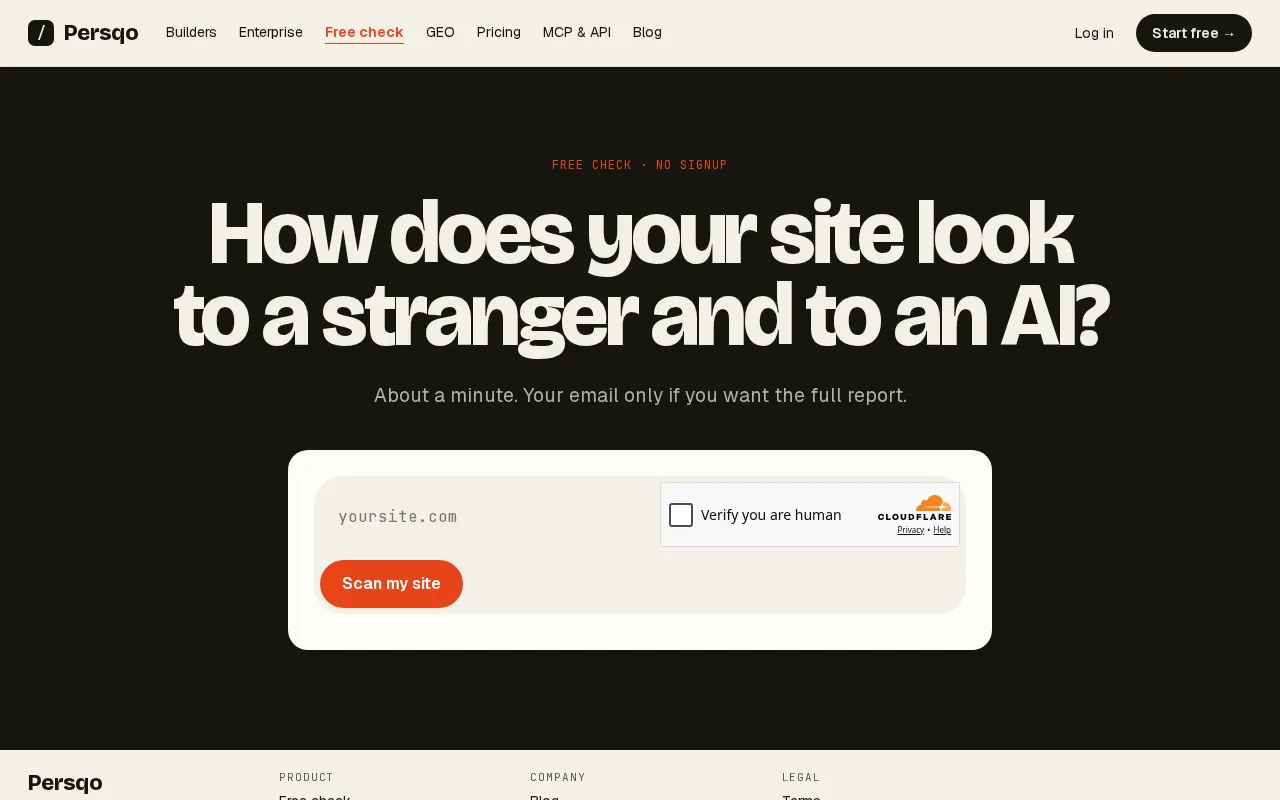
The free check no longer looks only at your home page. It follows the path a buyer takes, on desktop and on a phone: the home page, up to two category pages, a product page and other public pages, then home and product again on mobile. It takes a screenshot at every step.
It records what a shopper would hit: real console errors, failed requests, broken images, content that overflows the screen, tap targets that are too small and missing labels.
It stays safe on any public site. It only reads pages, respects robots.txt, never presses buttons, never touches the cart and never opens checkout or payment pages.
Evidence on every finding
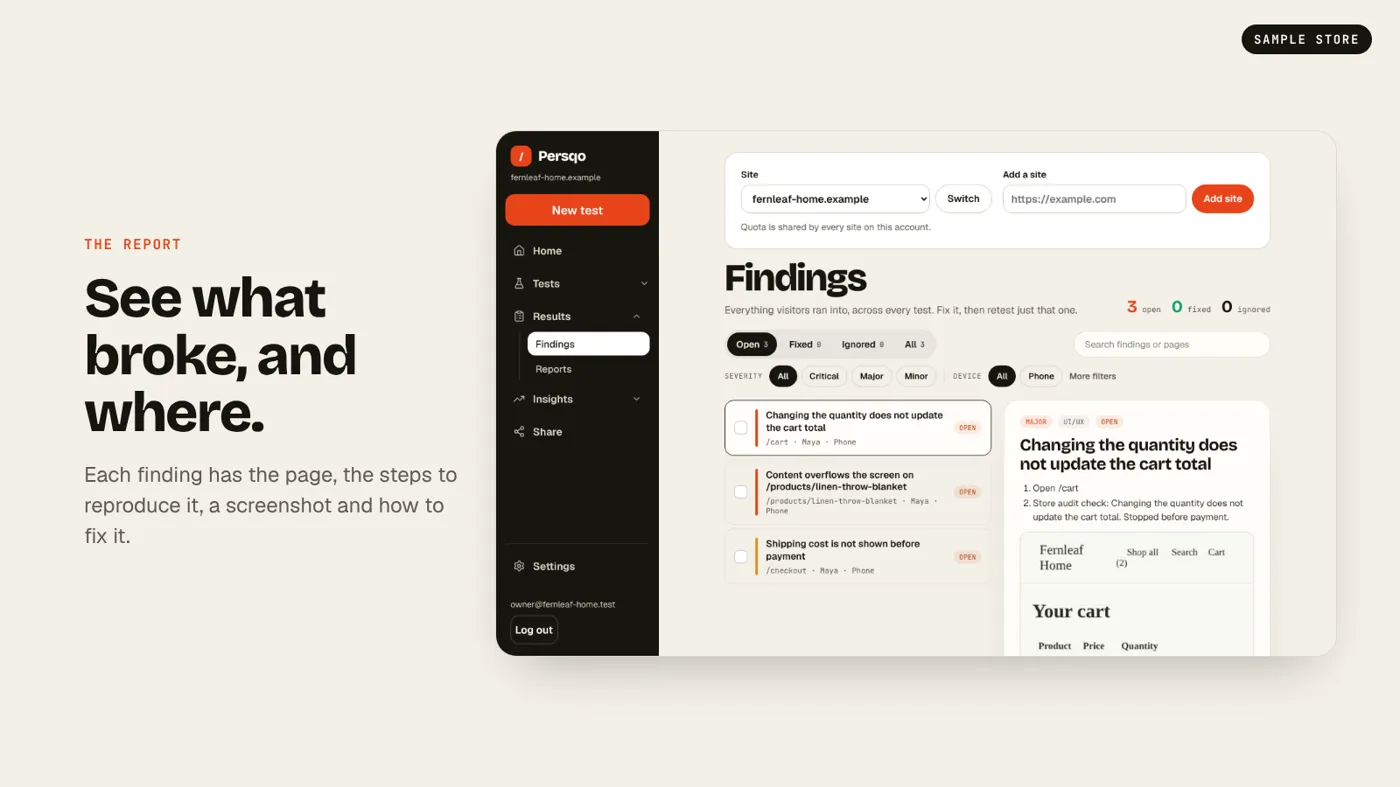
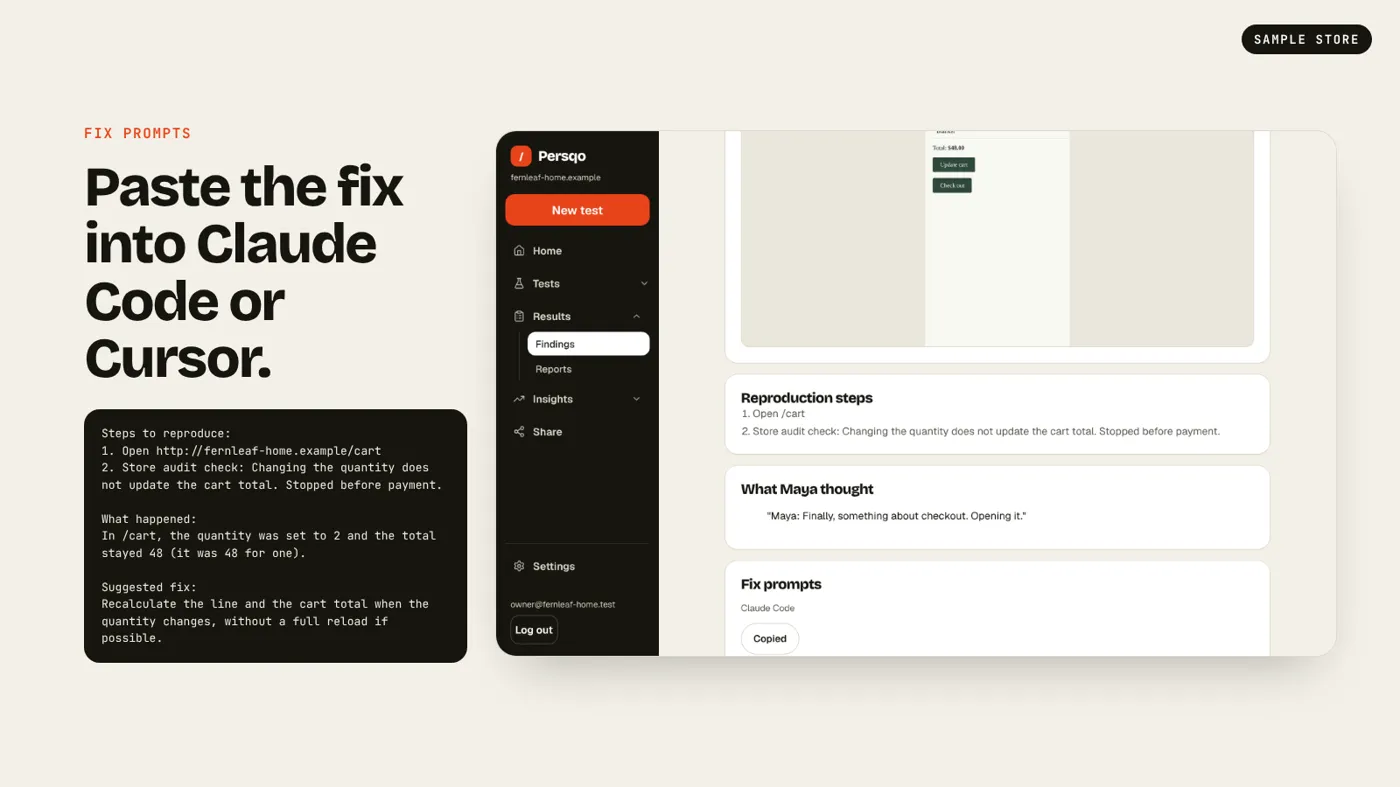
Every finding now names the page and the device, carries the screenshot from that step and quotes the browser's own error text when there is one. Each one also explains the impact and the fix, and ends with numbered steps to reproduce: the full page address, what the shopper did and what happened.
A quality gate before anything is published
A report is published only when it has at least two specific, explained findings with a page and a screenshot. If a check could not get far enough (for example, it never left the start page), you get an honest "Run a full persona test" instead of a thin report. Findings without evidence stay internal.
Visitors from your market, in your language
Persqo now detects a site's language and market from its page language, domain, currency, hreflang and the text itself. A Hebrew store on .co.il gets a local Hebrew-speaking visitor, not an English one who gives up on the first page. A finding about language only appears when the site's own signals conflict, such as a page that declares English but is written in Hebrew.
A deeper store test
The store test now finds products on stores with their own URL structure. It walks category pages two levels deep, recognizes a product page by its product data or add to cart button, and falls back to the products the shopper actually reached in the same run. On our fixture store all 11 store checks now run with none skipped.
Also fixed:
- Reloading a finished run shows the saved report right away instead of "Nothing stood out".
- A newsletter, club or VIP form no longer counts as an account sign up. Only a real account form does.
- If a store report is missing a core check (finding products, the product page, add to cart, reaching checkout), you get "Run a full persona test" instead of a partial report.
Persqo for WooCommerce
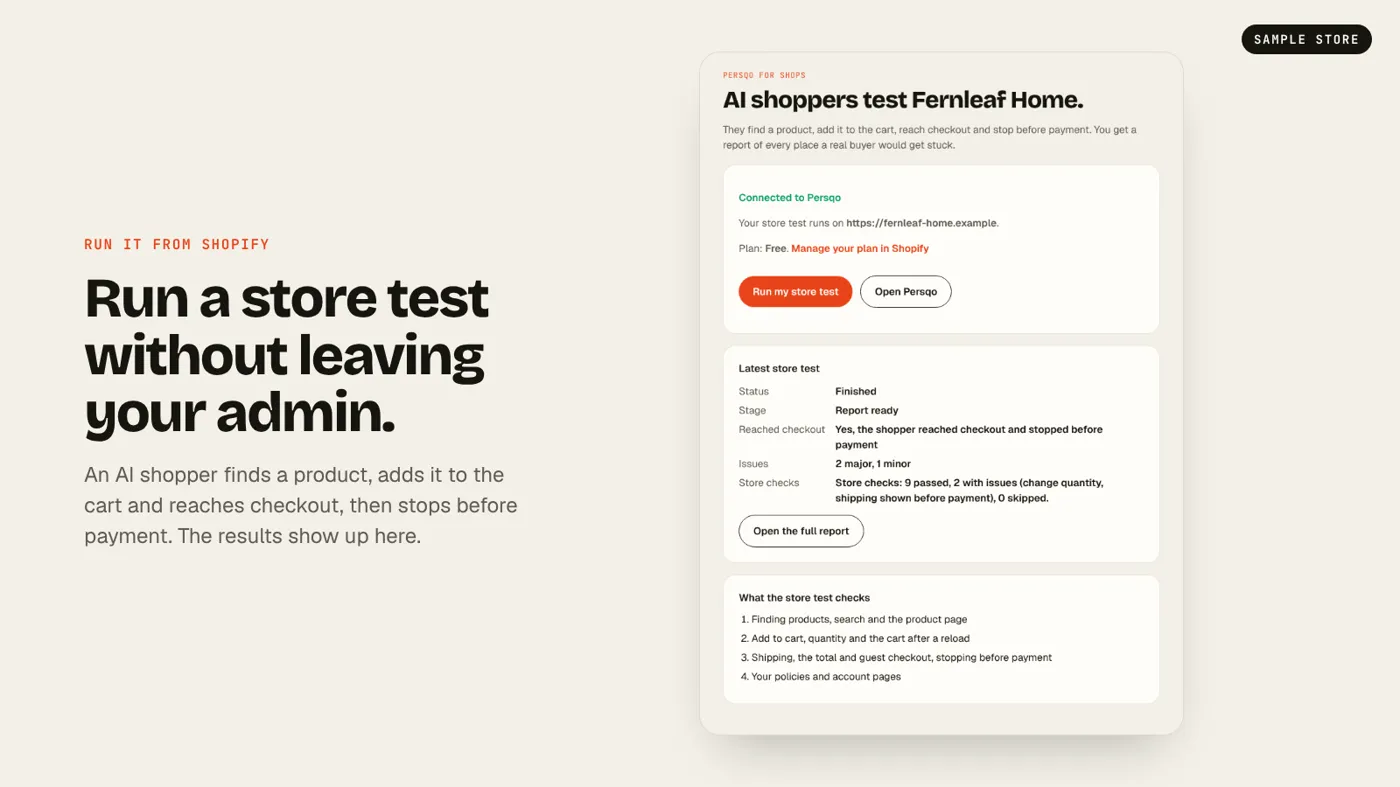
A new WordPress plugin puts Persqo under WooCommerce > Persqo. Paste your API key, connect, and the plugin verifies your site automatically. Press "Run store test" to send a store shopper that stops before payment. Results show in your dashboard: the score, each finding with severity, the shopper's thought, page, steps, fix and screenshot, the step timeline and a share link.
A "Plan and usage" card shows your plan, when usage resets and how much of each metric you have used.
Persqo for Business Sites (WordPress)
Not every site is a store. The new Persqo for Business Sites plugin runs a lead site test for service and brochure sites. After the visitor's walk it checks:
- Navigation: every main menu link opens.
- Contact form: it exists, has a submit button and labeled fields.
- Phone, WhatsApp, email and booking links.
- Site search, if you have one.
- The phone view and real page speed.
- GEO and SEO basics: title, meta description, Organization or LocalBusiness schema, llms.txt and canonical.
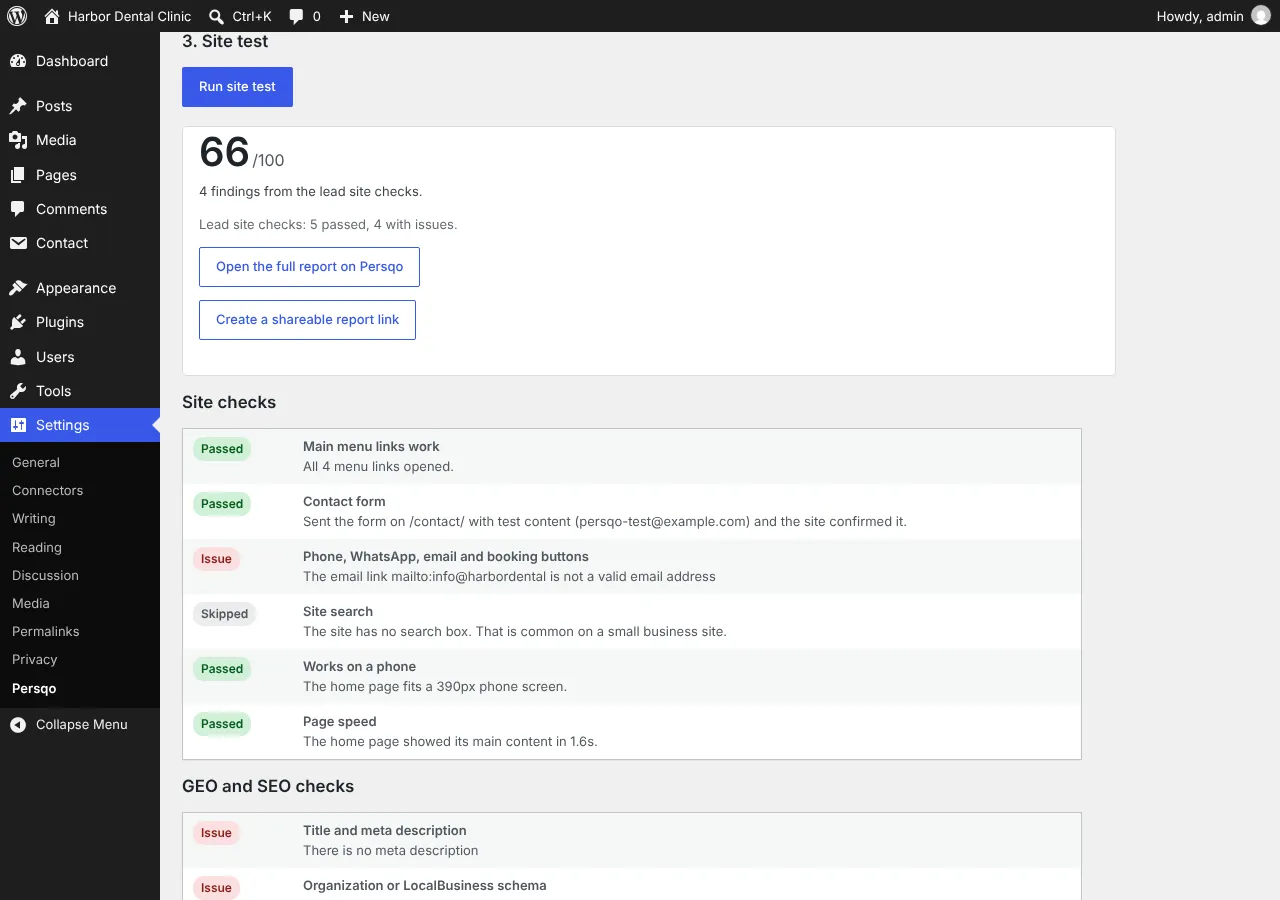
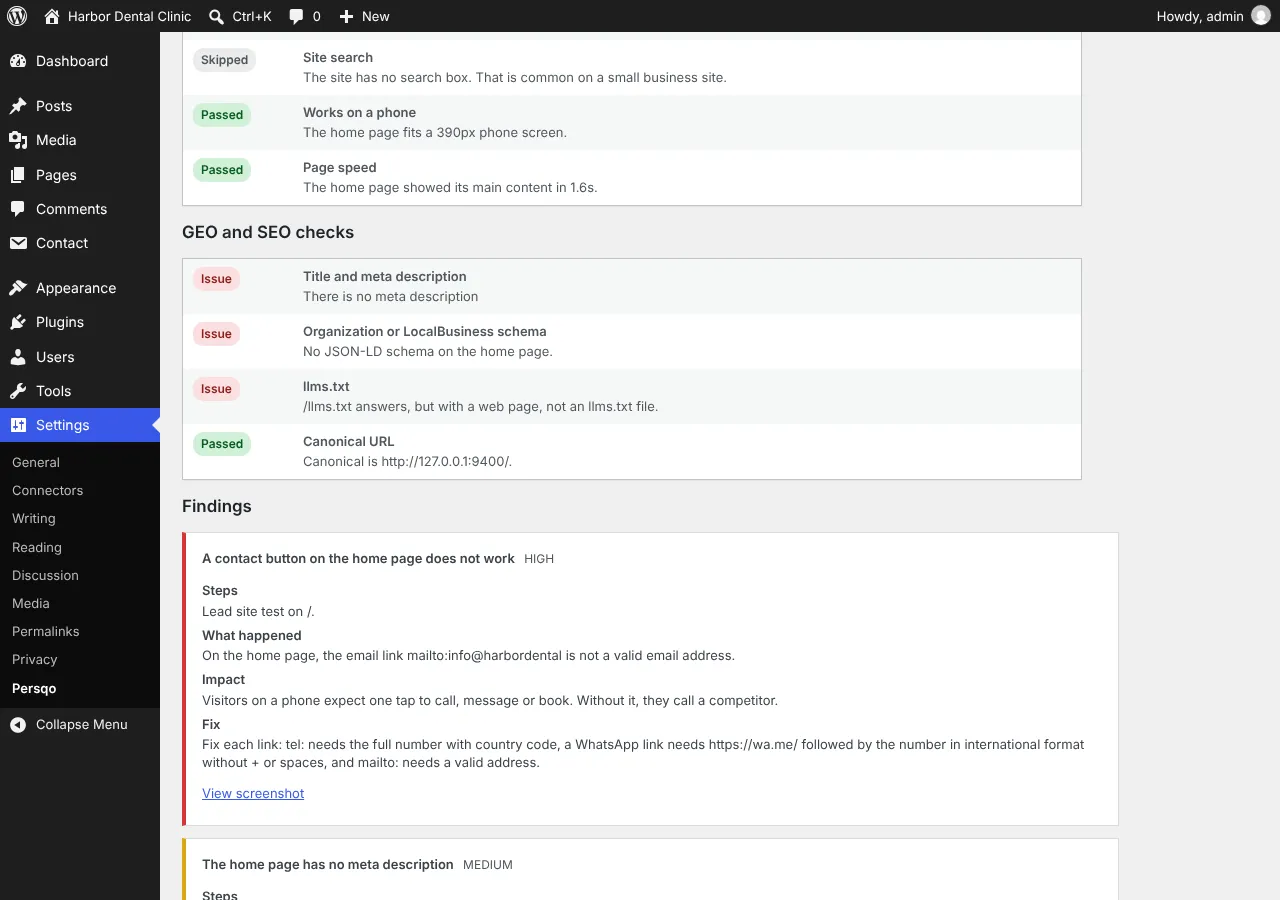
Submitting your contact form is off by default. It only runs if you opt in on a verified site, with clearly marked test content, and forms with a CAPTCHA are skipped.
Shopify listing refresh
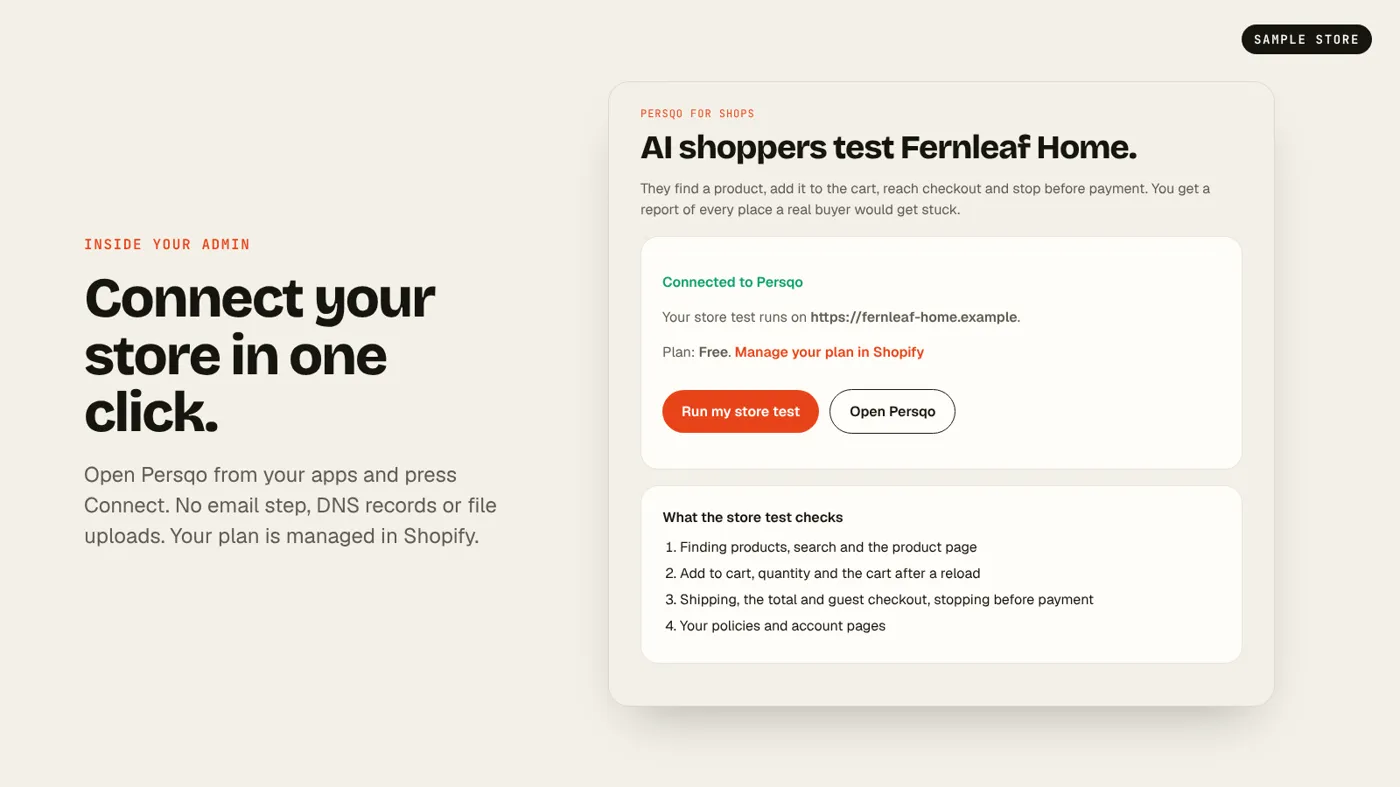
Our Shopify App Store listing has four new screenshots taken from the real app on a sample store: the connected screen, a finished store test, the findings report with steps to reproduce and a screenshot, and a finding with its Claude Code fix prompt.
Behind the scenes: test first, then reach out
When we contact a store, we now test it first in a safe public mode that follows robots.txt and stops at the cart. Any message we send includes the actual findings and a link to the report.
Case study: Persqo Shops × Pandi Panda
We started a living case study with Pandi Panda, a panda t-shirt brand built with Claude that Persqo's agents improve every week. Week 1 has the starting point. Read the case study.
Coming soon
- Monthly SaaS plans.
- Testing for sites built with AI builders such as Lovable and Claude.
Try it on your site
Paste your URL and see what a real shopper hits. Run a free check.
Questions people ask
Does the free check touch my cart or checkout?
No. It only reads pages, respects robots.txt, never presses buttons, never writes to the cart and never opens checkout or payment pages.
What does every finding include now?
The page and device, the screenshot from that step, the browser's error text when there is one, the impact, the fix and numbered steps to reproduce.
Does Persqo work with WordPress?
Yes. Persqo for WooCommerce runs store tests from WooCommerce > Persqo, and Persqo for Business Sites runs lead site tests for service and brochure sites.